

Macy’s E-Commerce
Virtual AR Try-On Optimization
The objective of this thesis project was to enhance Macy’s online shopping experience by introducing and optimizing an AR-driven virtual try-on system for the jewelry category.
The goal was to create a more immersive, confident, and user-friendly shopping experience that improves engagement and purchase decisions.
The objective was to improve:
UI Design and Prototyping
Duration: 6 Month
Graduate Retail UX Research Initiative
New York Institute of Technology - Master’s Thesis Project
Fall 2024
My Role : UX/UI Designer & Research Lead
Tools & Process: Figma, Miro, SurveyMonkey, Qualtrics, Dovetail.ai, Google Sheets, Visily.ai, Attention Insight.
Process & Responsibilities:
UX/UI Design, Advance Research / Navigation / Unity for AR / End-to-end research / LO-FI, HI-FI Wireframing/ Prototyping / User Testing / Competitive Analysis / Data Analysis / Performance Evaluation / Project Management
A Quick Peek Into the Solution
We launched a functional MVP of the project, with:
A deep understanding of the problem around lack of AR awareness and usability
Identified gaps in navigation, visibility, and product interaction
Designed and tested an AR-based jewelry try-on experience
Created low and high fidelity prototypes
Validated the solution through user testing and data analysis
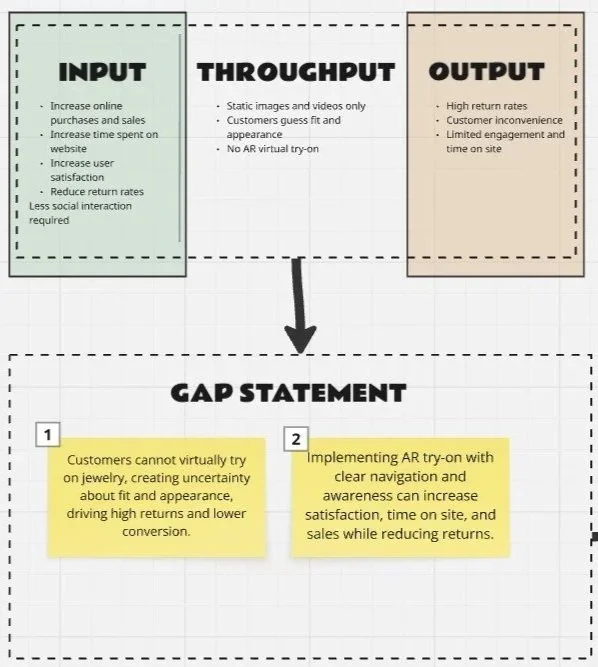
What was the gap?
The key gap identified was:
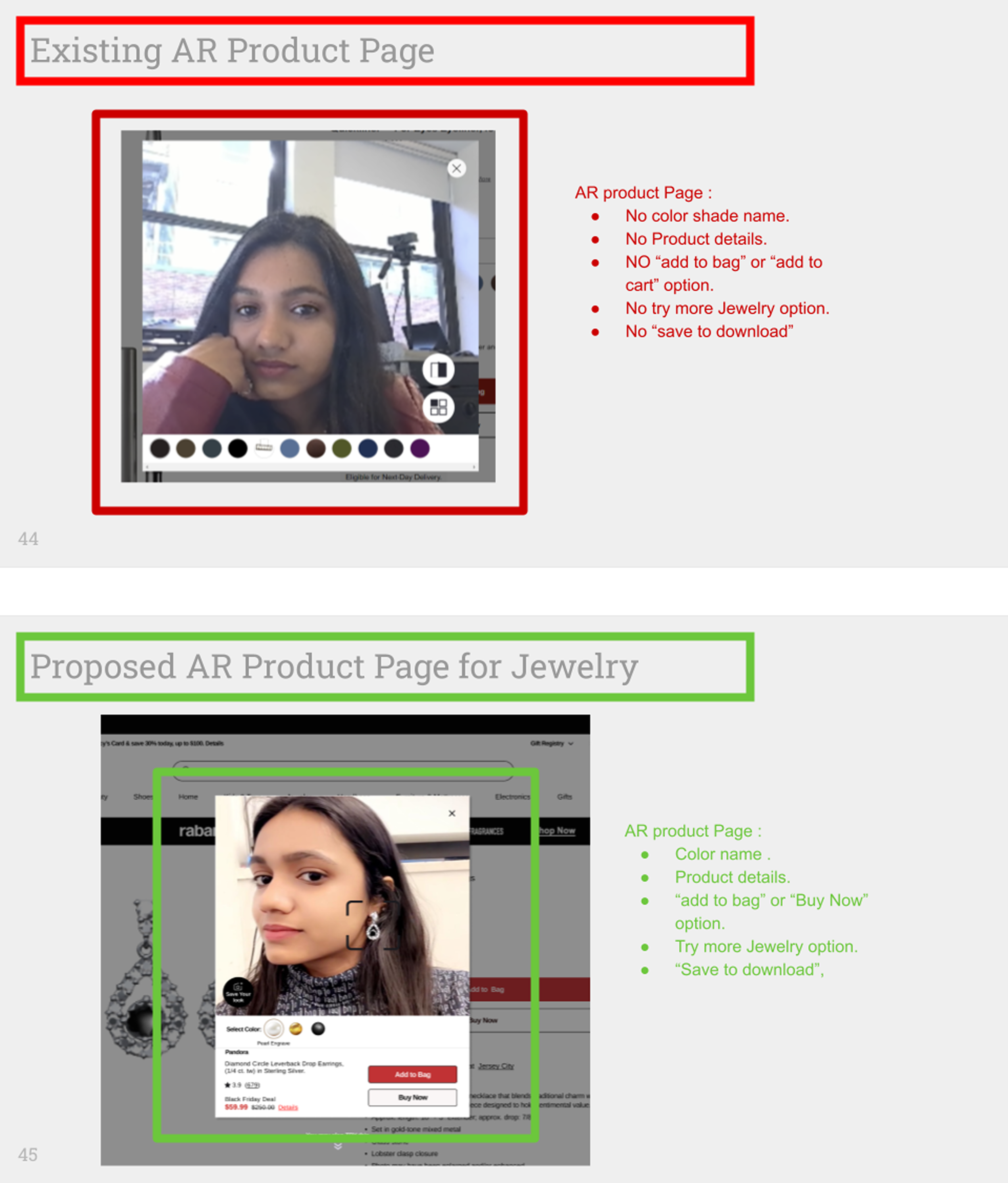
No AR feature for jewelry try-on
Low awareness and visibility of existing AR features
Poor navigation and discoverability
Non-intuitive AR icons and flows
Lack of product details within AR interface
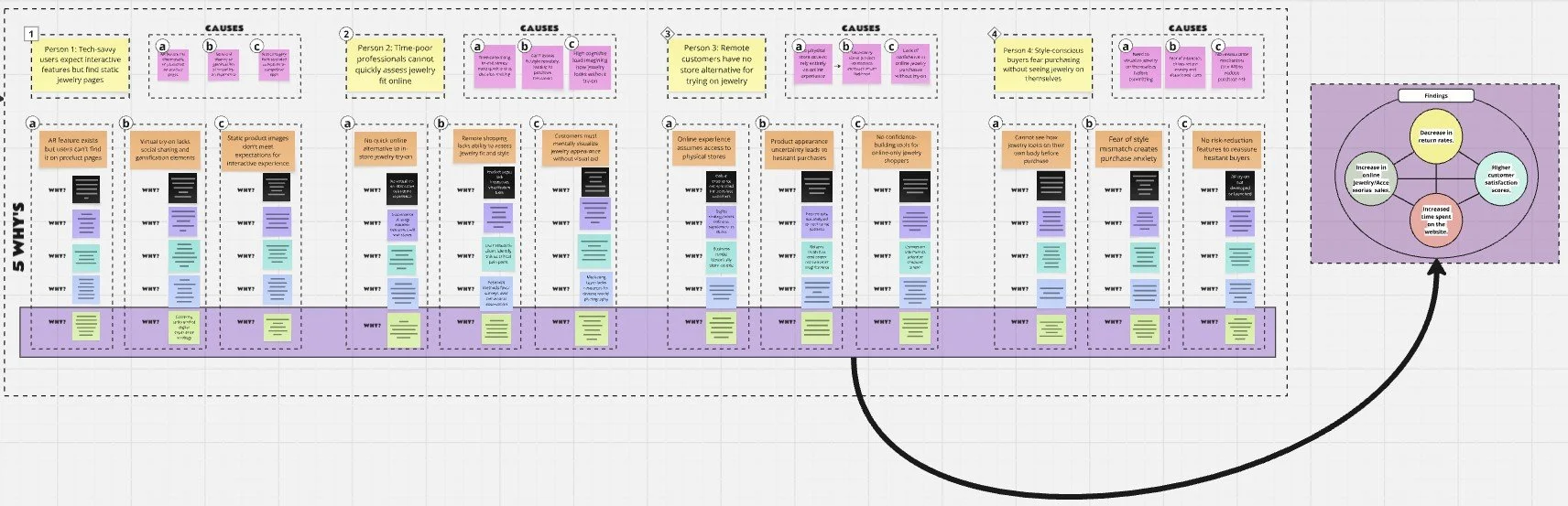
As highlighted in your thesis, users were unable to visualize products in real-world context, leading to hesitation and abandoned purchases

How will the solution benefit Macy’s?
Enhancing the AR experience can:
Increase user engagement and time spent
Improve purchase confidence
Reduce return rates
Boost conversion rates and sales
Strengthen Macy’s competitive position in e-commerce
Your research also showed that AR can significantly improve decision-making and satisfaction, making it a strong business opportunity.
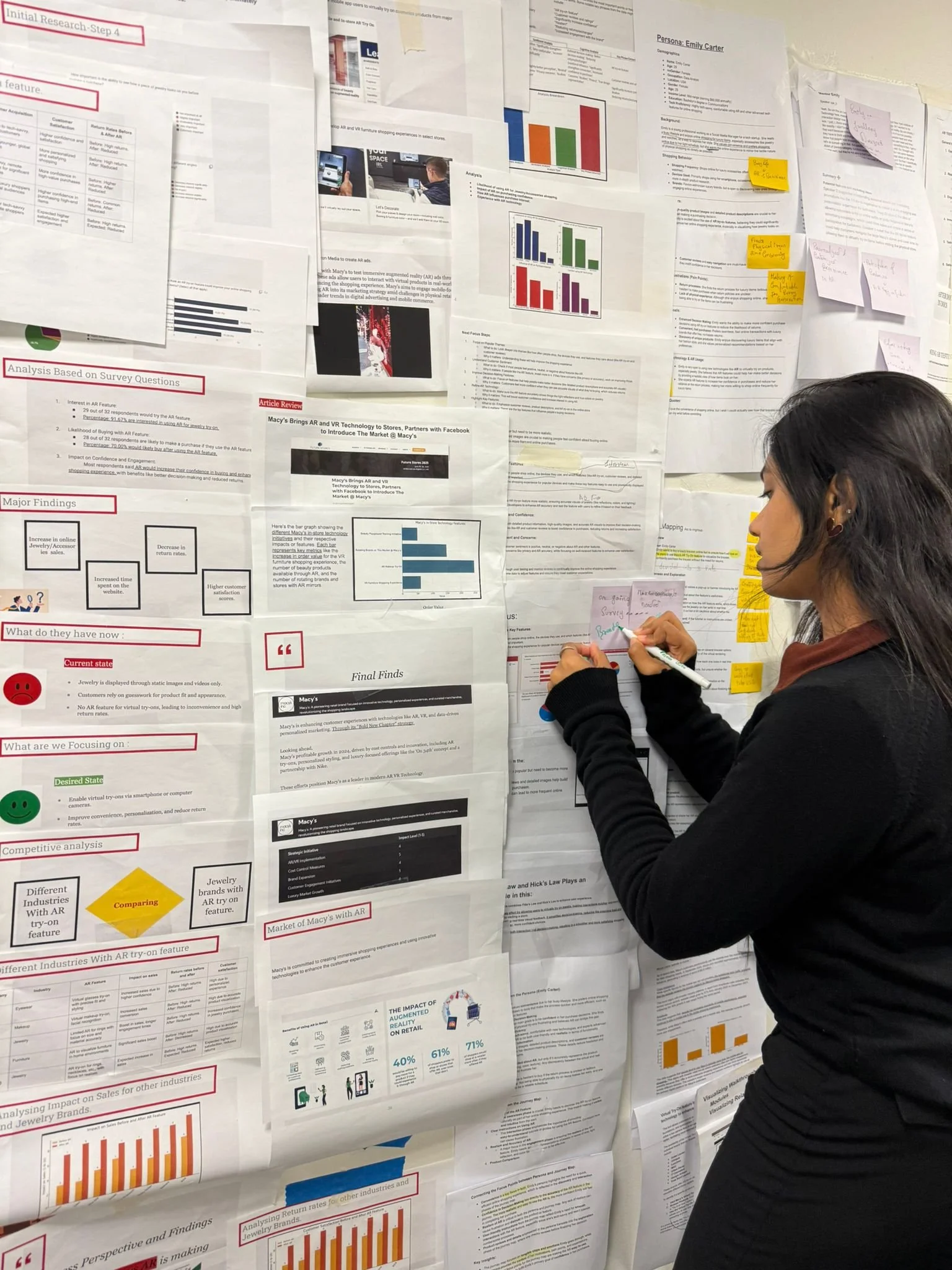
Research and Analysis
-
![]()
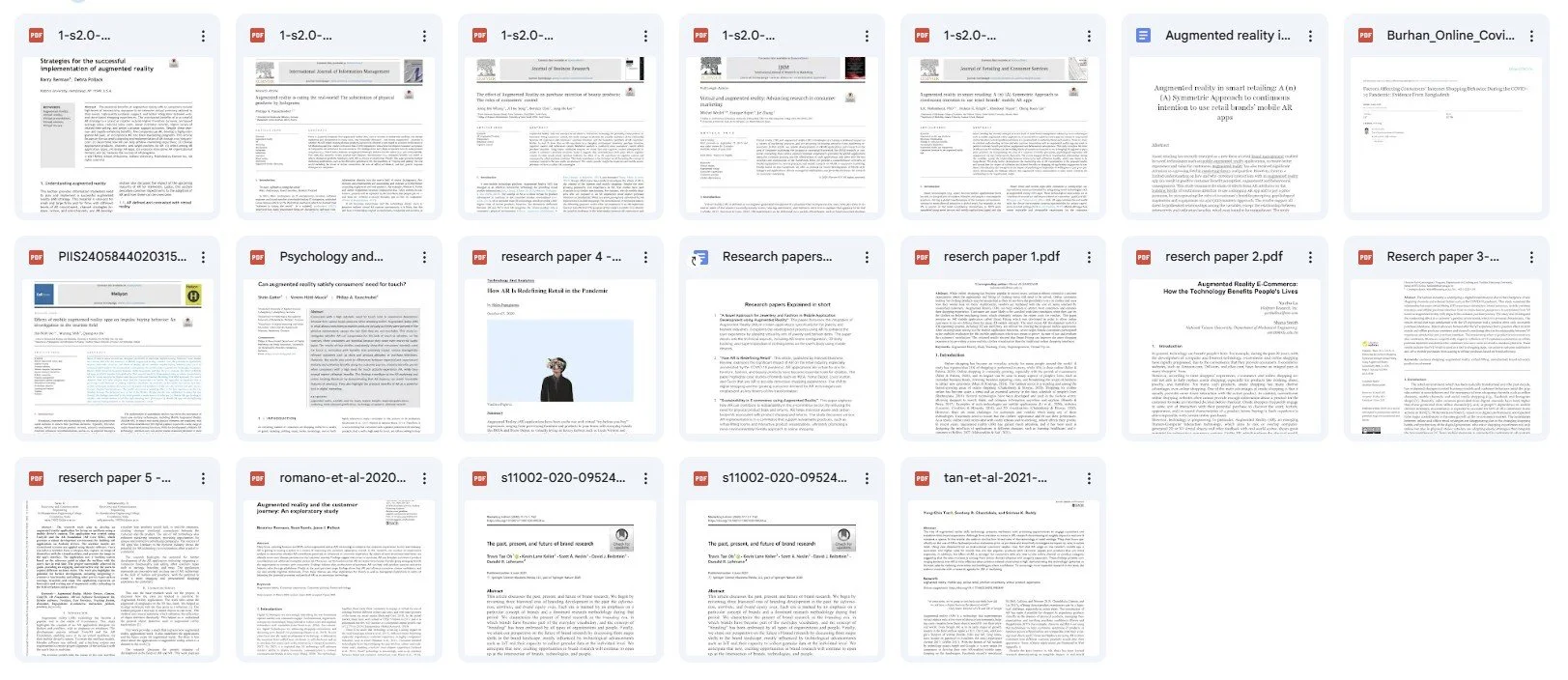
Literature Review
Understood & Read Research paper on AR & its Pros/Cons.
-
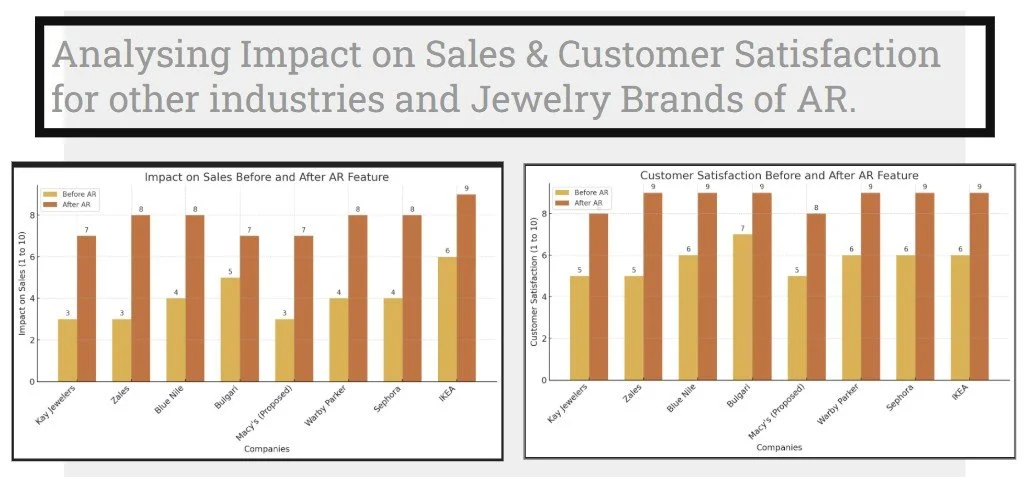
![A presentation slide titled 'Analyzing Impact on Sales & Customer Satisfaction for other industries and Jewelry Brands of AR.' The slide contains two bar charts comparing data before and after AR feature implementation for various jewelry companies including Kay Jewelers, Zales, Blue Nile, Bulgari, Macy's (Proposed), Wary Parker, Sephora, and IKEA. The charts show impact on sales and customer satisfaction, with notable increases after AR adoption.]()
Competitive analysis
By synthesizing cross-industry research and market data, we found that AR creates high-value retail confidence in other industry.
-
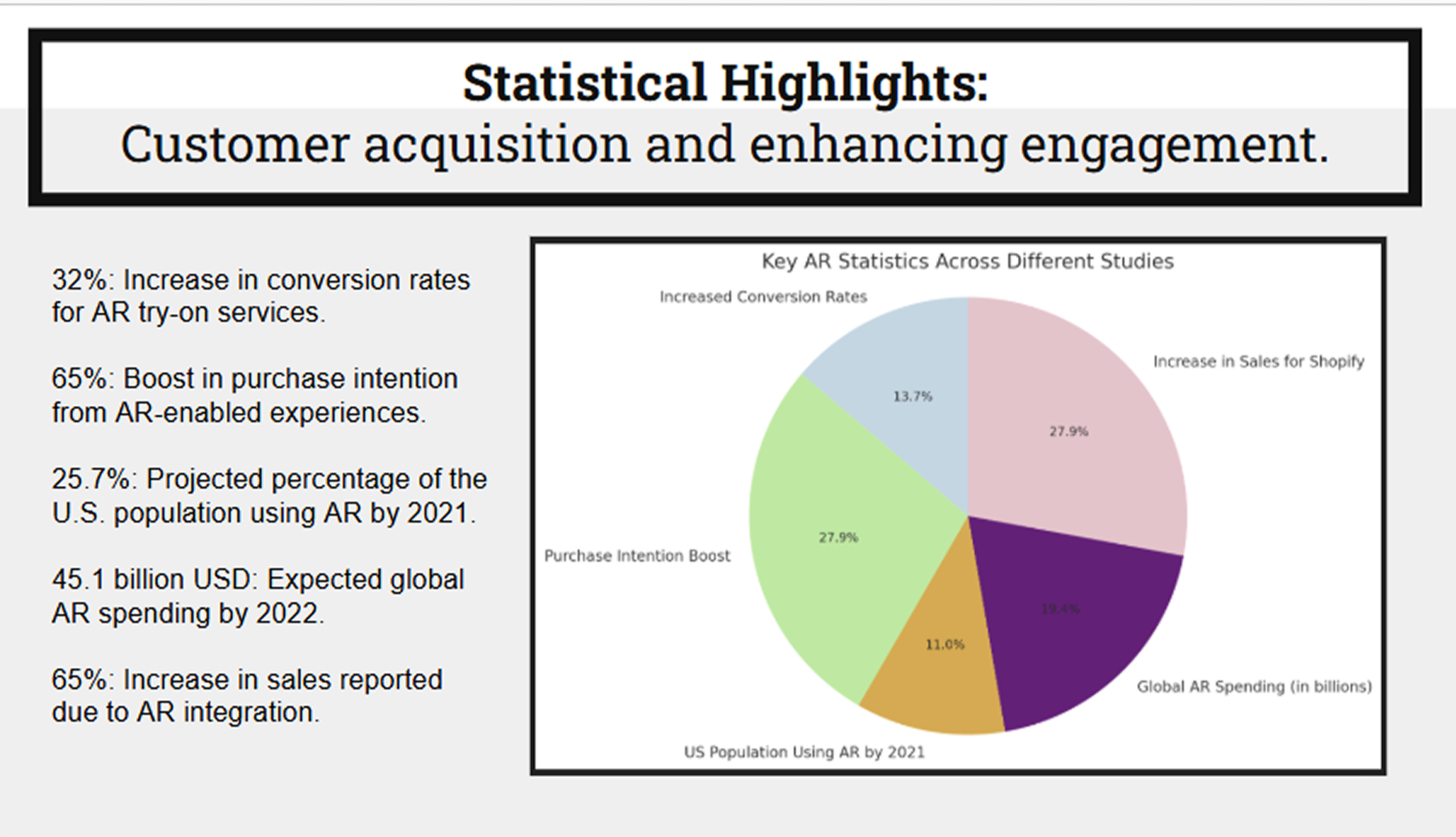
![A presentation slide titled 'Statistical Highlights' about augmented reality (AR) customer engagement. It includes a pie chart showing key AR statistics across different studies, with segments labeled 'Increased Conversion Rates,' 'Increase in Sales for Shopify,' 'US Population Using AR by 2021,' 'Global AR Spending,' and 'Purchase Intent Boost.' The slide also lists percentages and statistics related to AR in a bulleted list on the left side.]()
Impact of AR in Shopping
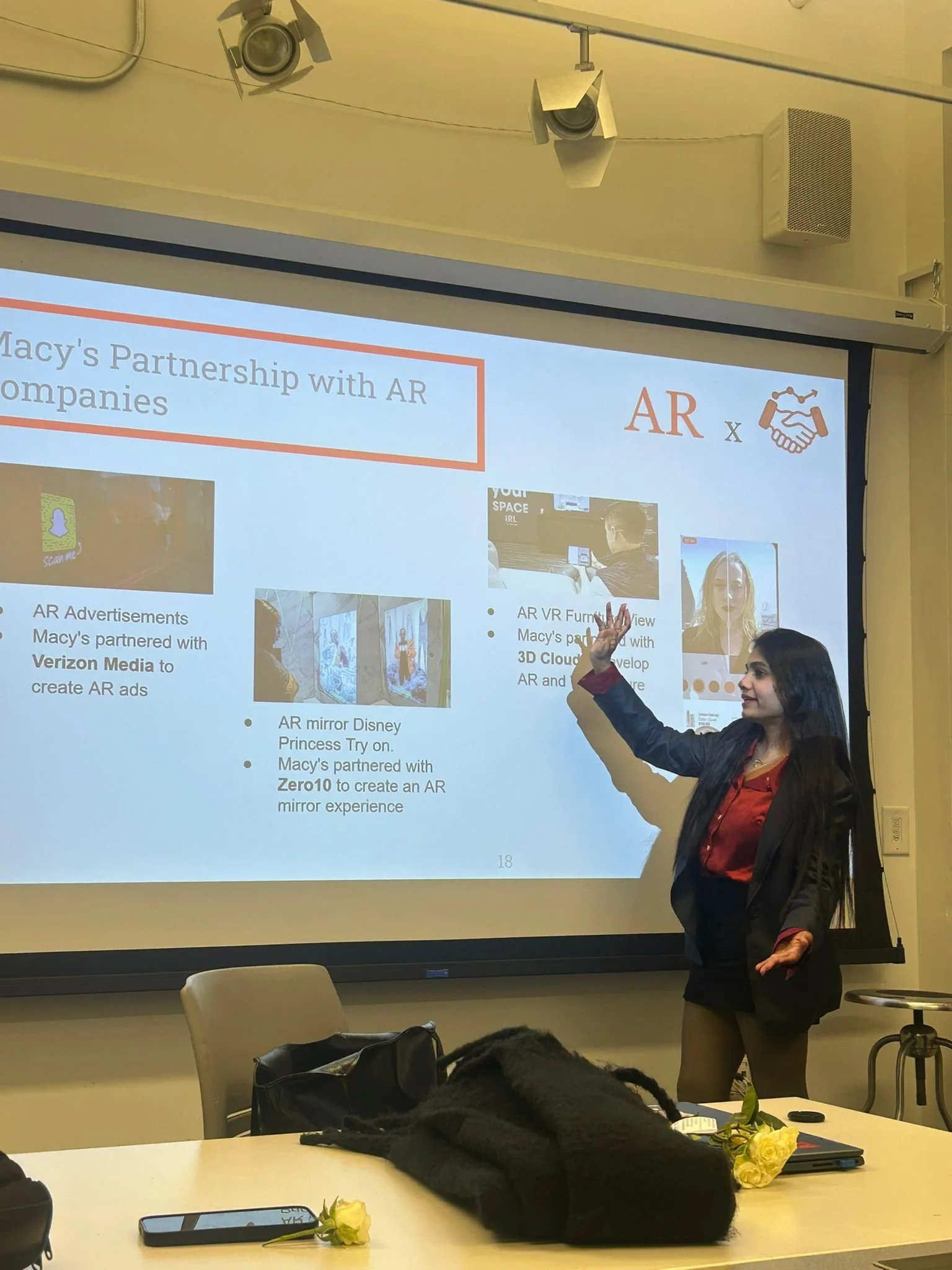
Macy's Partnership with AR Companies
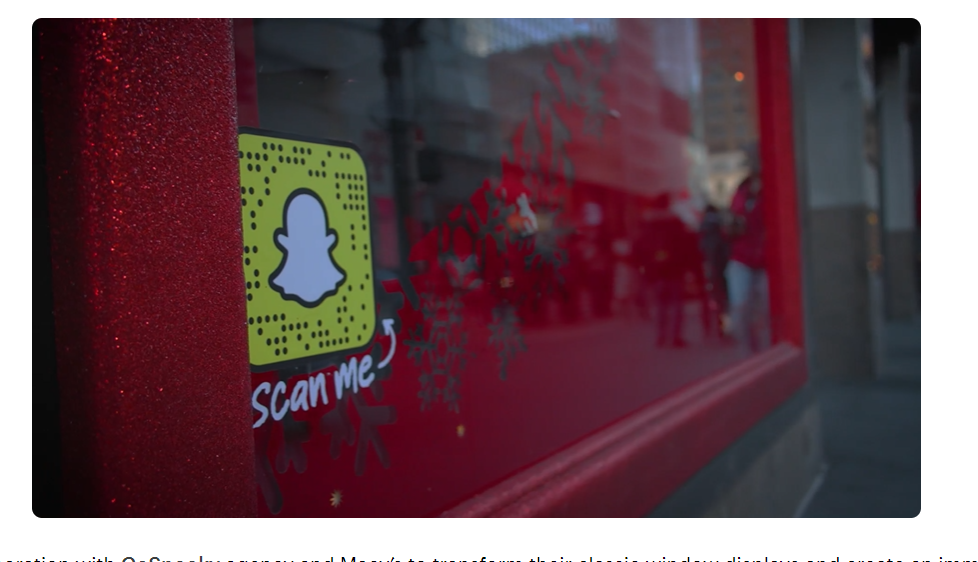
AR Advertisements
Macy's partnered with Verizon Media to create AR ads
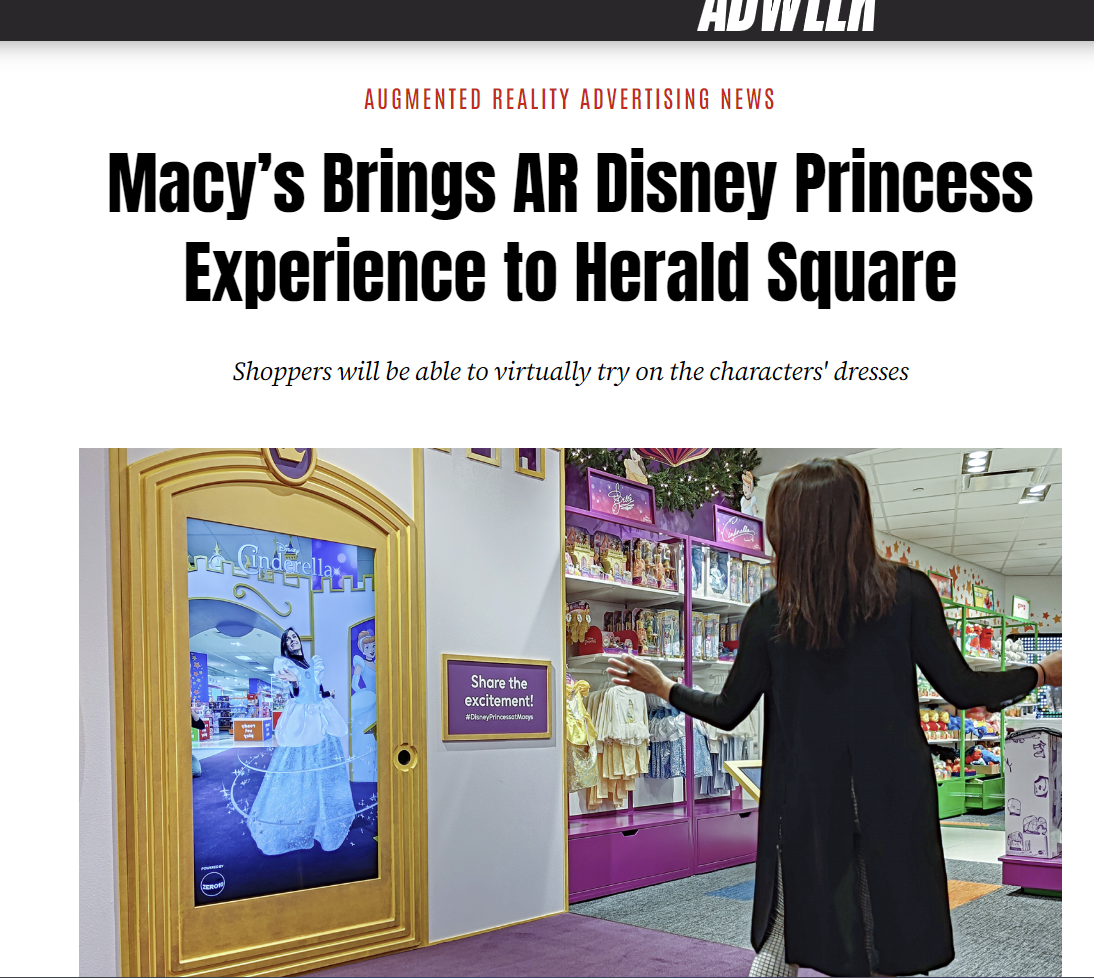
AR mirror Disney Princess Try on.
Macy's partnered with Zero10 to create an AR mirror experience
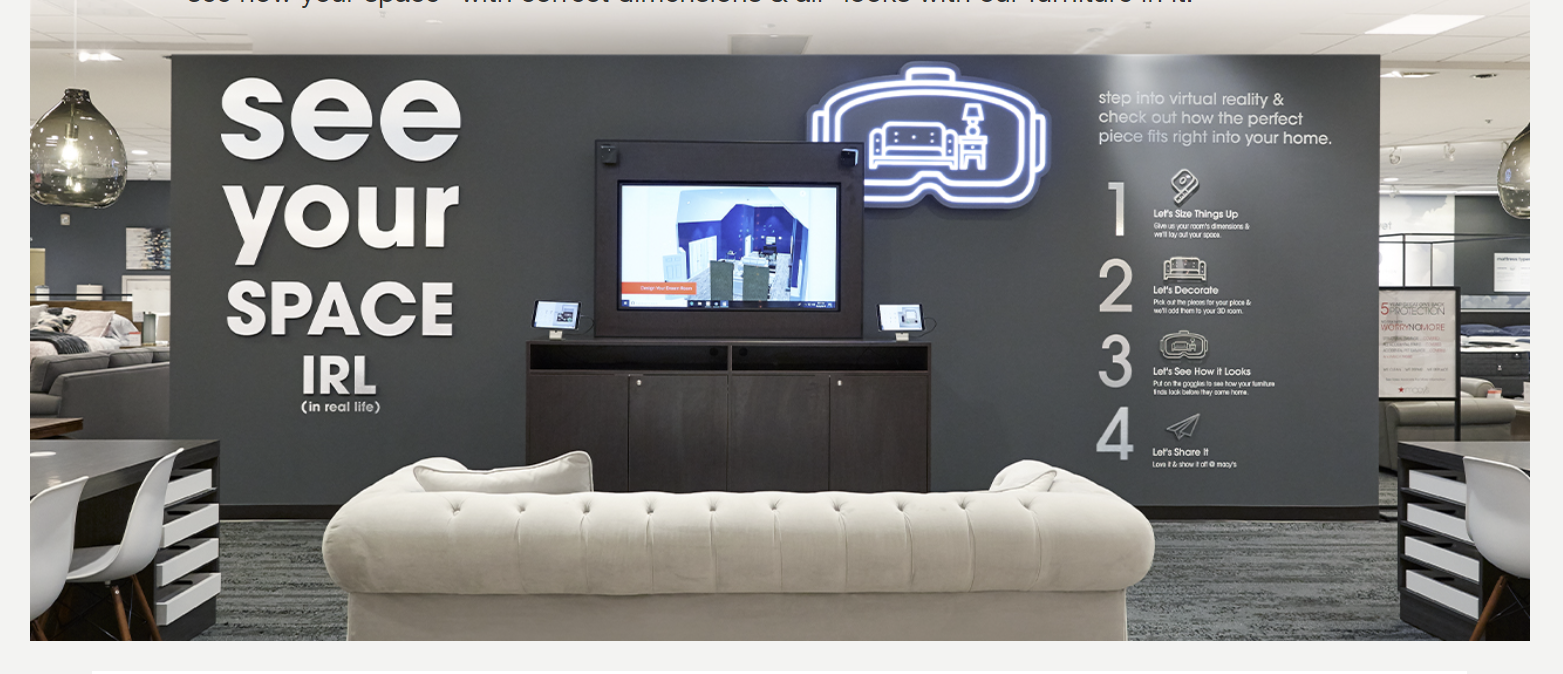
AR VR Furniture View
Macy's partnered with 3D Cloud to develop AR and VR furniture
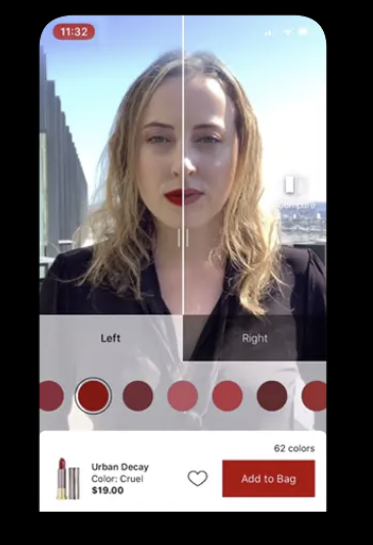
AR Cosmetic TRY ON
Macy's partnered with Modiface
Understanding Existing Feature
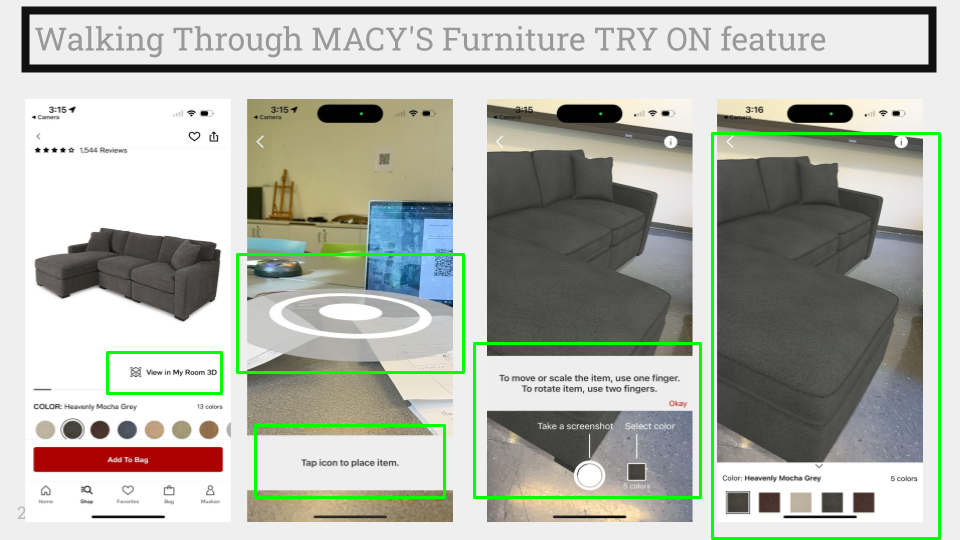
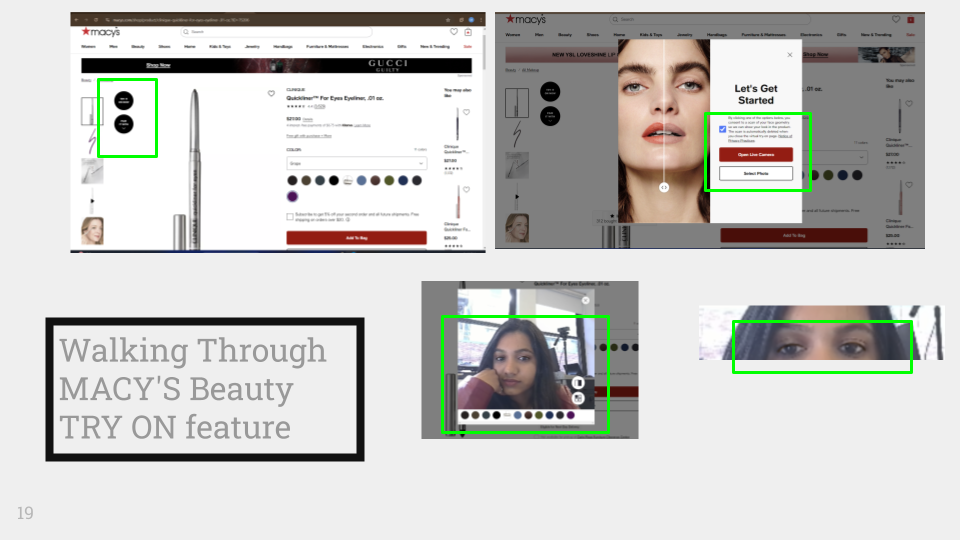
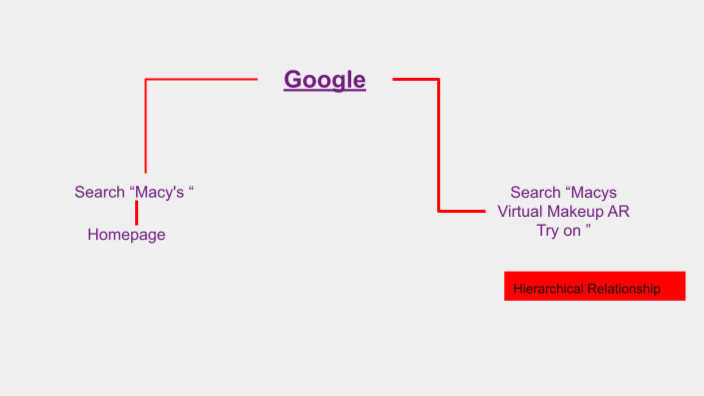
Navigation Hierarchy of macy's
-
![Diagram showing steps to find Macy's homepage using Google, with options to search 'Macy's' or 'Macy's Virtual Makeup AR Try on,' and a red box indicating 'Hierarchical Relationship.']()
Navigation Flow
When you search on Google, it shows two different sites.
(Red Box Shows the Hierarchical Relationship ) -
![]()
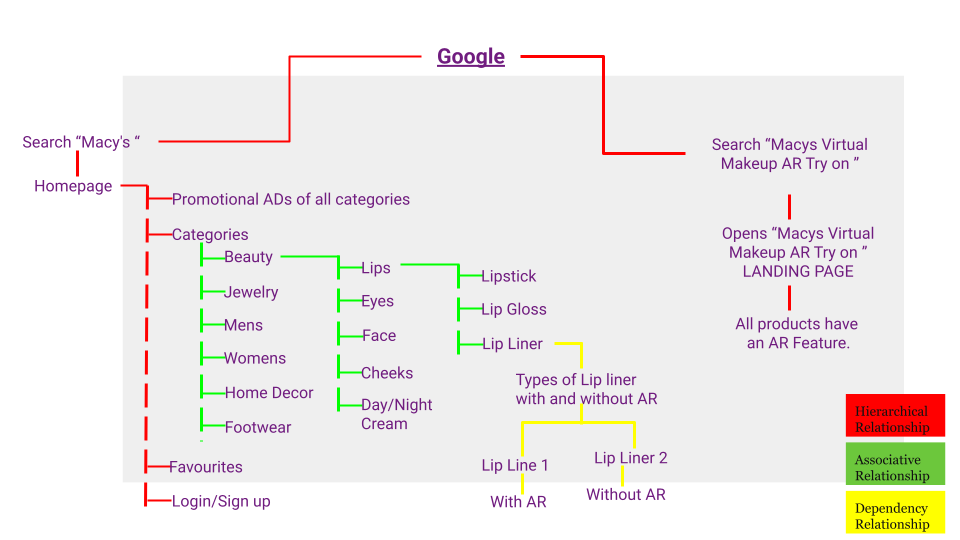
Navigation Hierarchy of macy's Through Modules and Element
Red Box=Hierarchical RelationshipGreen = Associative Relationship
Yellow= Dependency Relationship
-
![Flowchart illustrating types of relationships between Google search results, with hierarchy, association, and dependency relationships indicated by red, green, and yellow lines.]()
Visual Relationship OF macy's Current flow
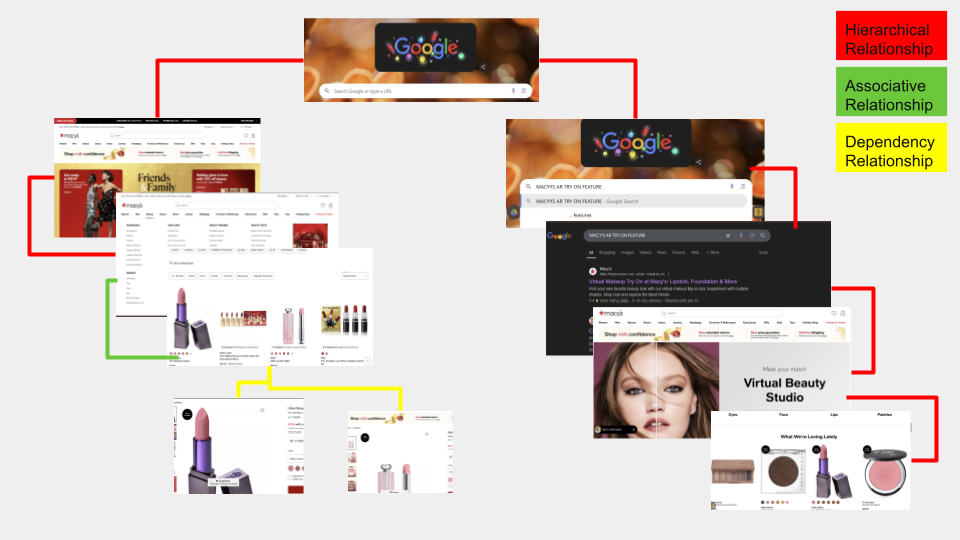
LOW fI & HI FI WI (Existing and Proposed feature)
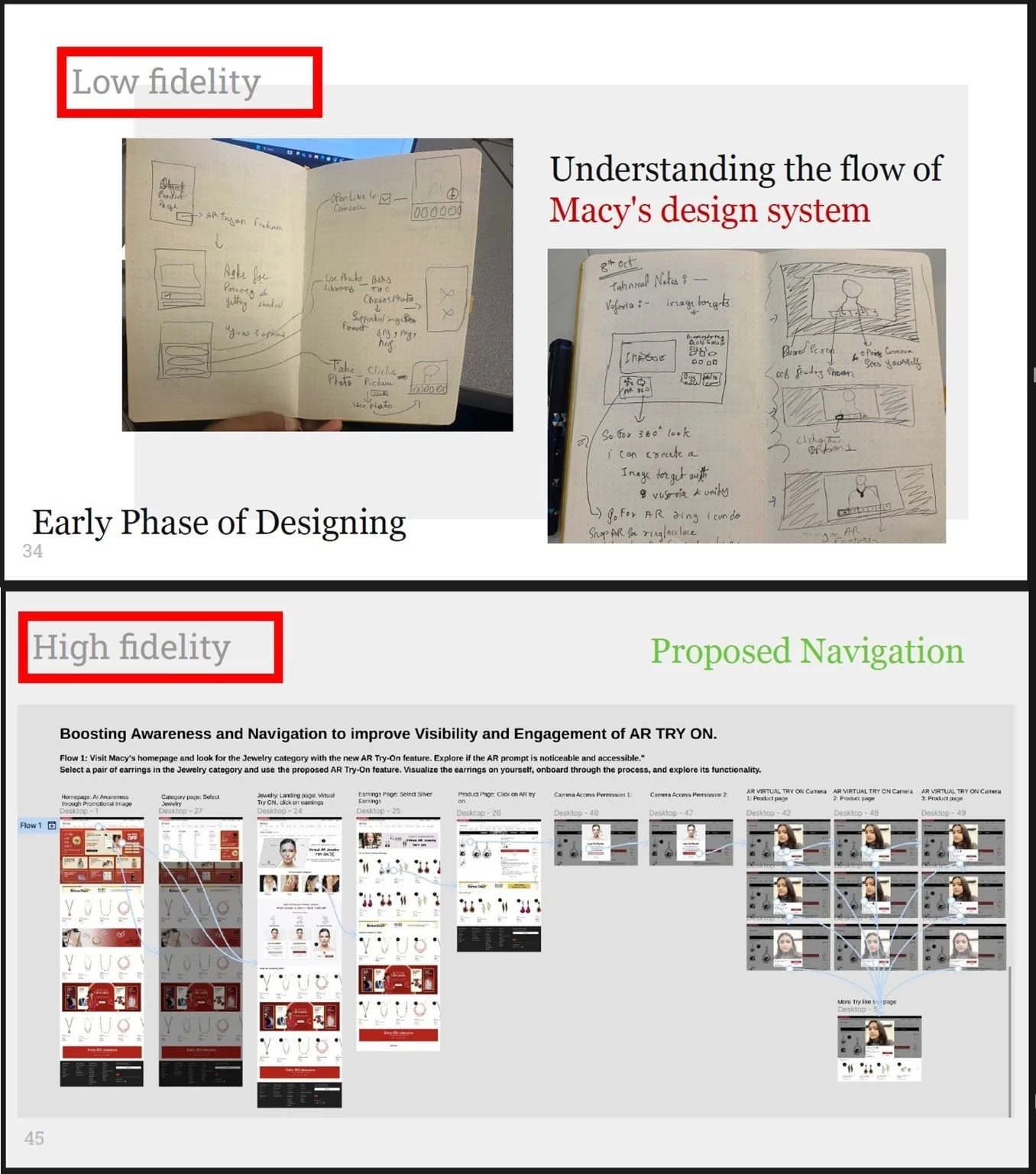
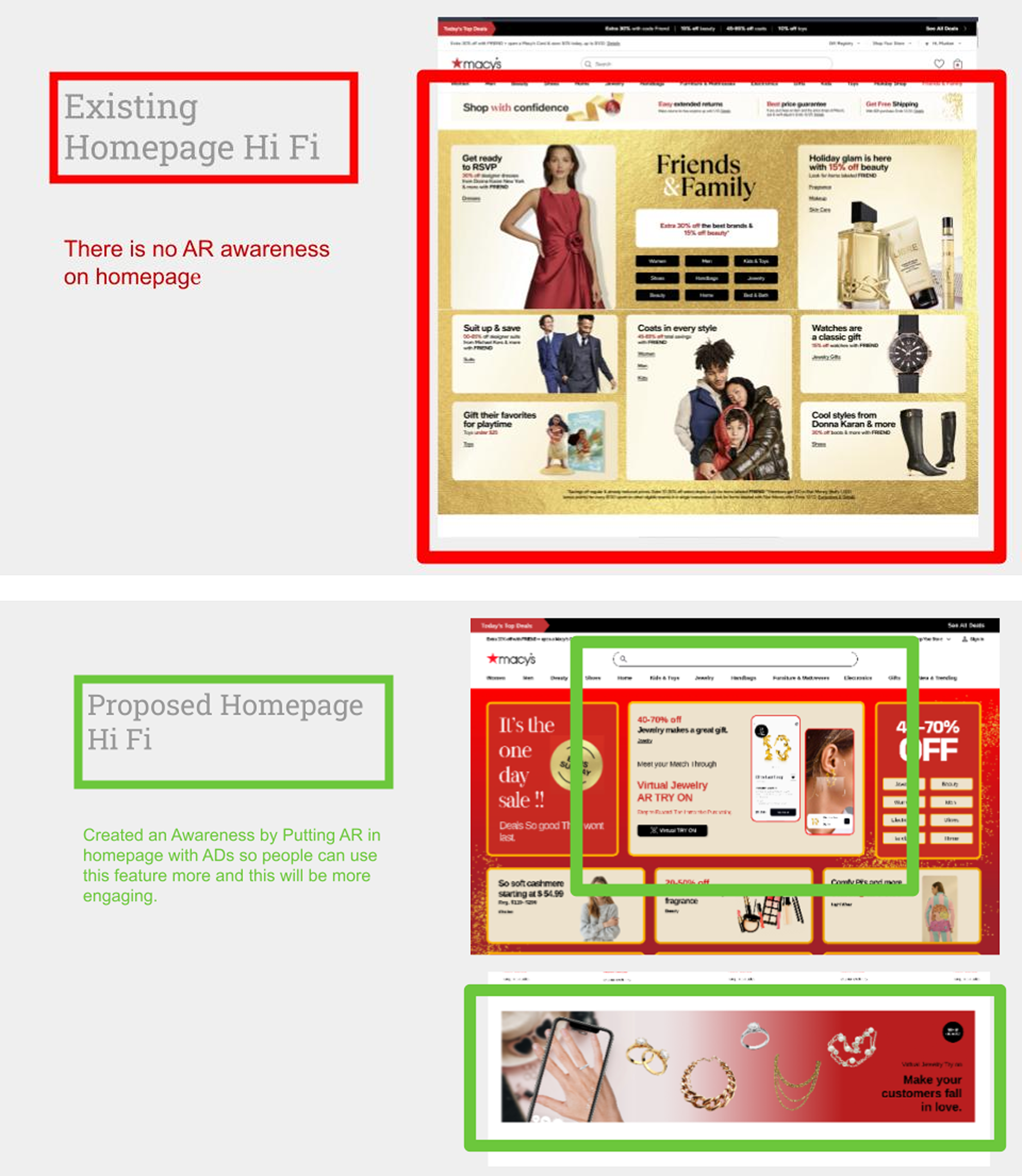
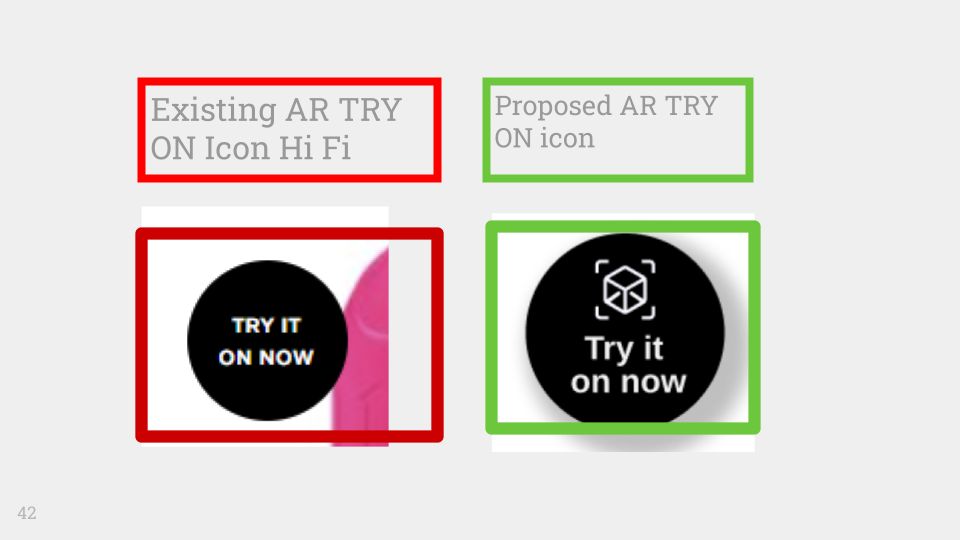
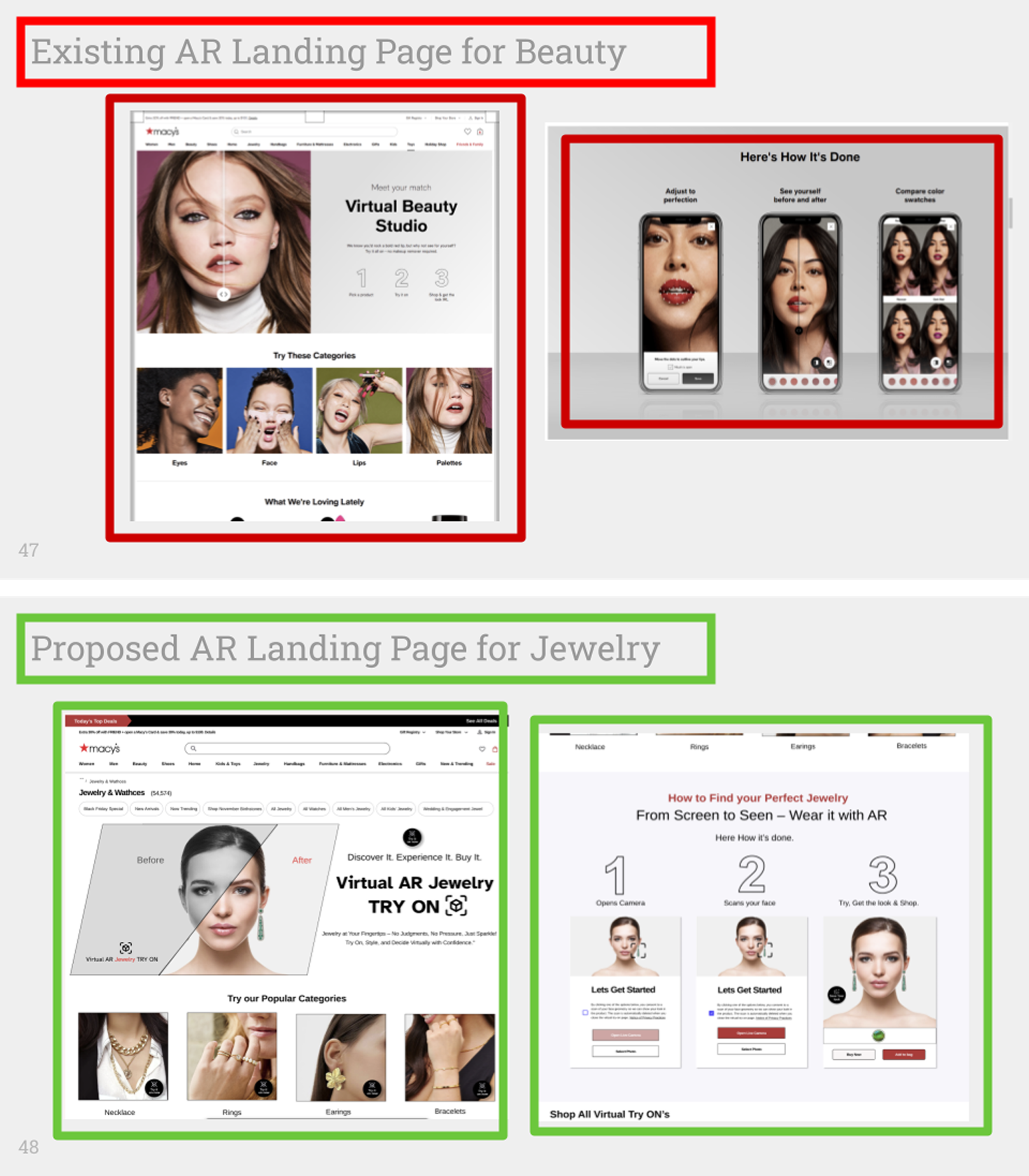
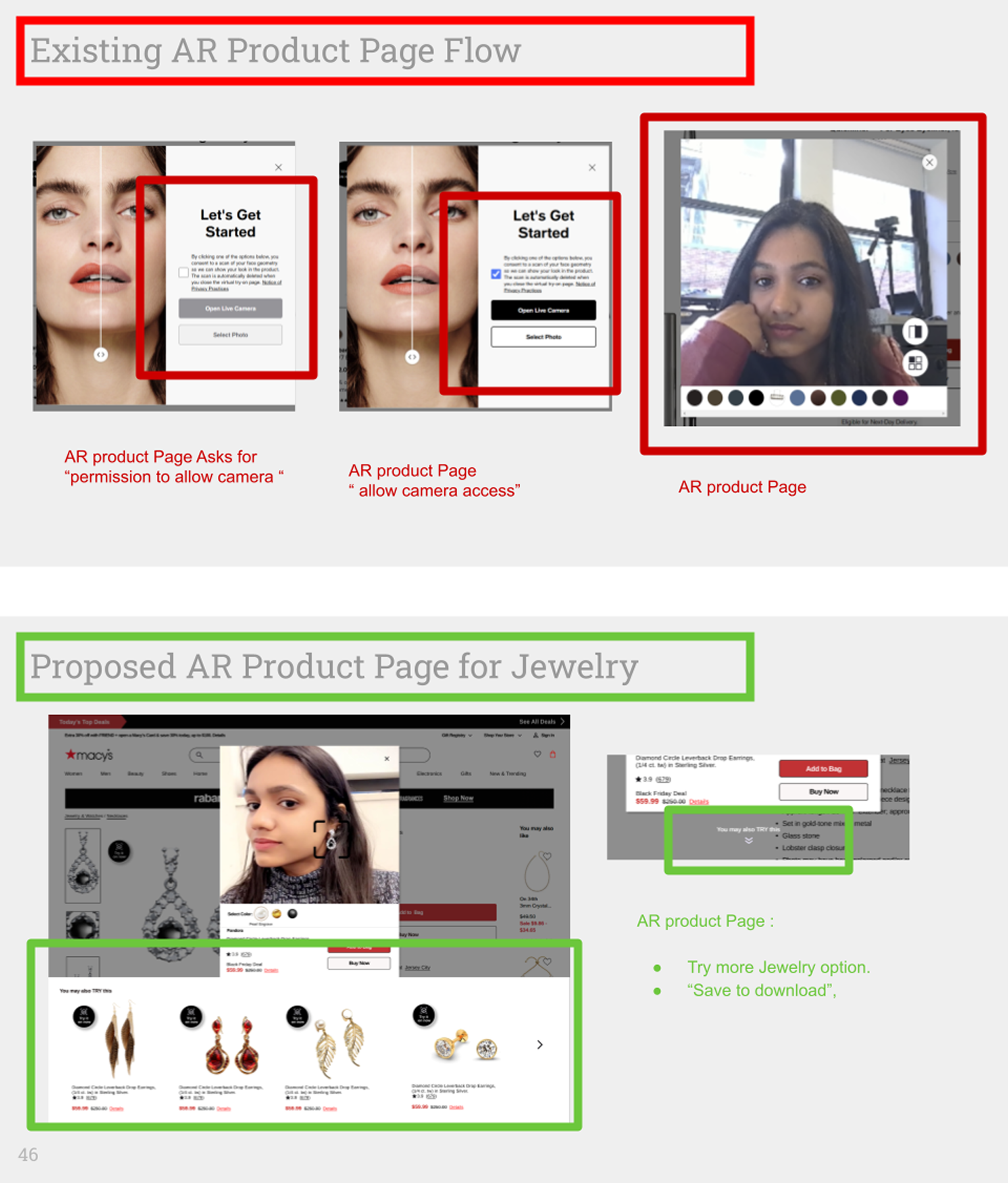
User Testing & Research Methodology
To evaluate the effectiveness of the redesigned AR experience, I conducted scenario-based usability testing comparing Macy’s existing experience with the proposed AR solution.
Approach:
Observational, scenario-based usability testing
Mixed methods: qualitative + quantitative analysis

Process:
Pre-test: Assessed user familiarity and comfort with AR
Task-based testing:
Find AR feature in jewelry category
Navigate Macy’s existing AR (beauty flow)
Use redesigned AR jewelry try-on
Post-test: Gathered feedback on usability, clarity, and experience
This ensured both behavioral insights + measurable validation
Final Impact
Increased user satisfaction and engagement
Improved purchase confidence
Reduced reliance on guesswork
Strong preference for AR-enabled shopping
Users described the redesigned experience as: “intuitive, engaging, and confidence-building”
Key Tasks Evaluated
Discoverability of AR features
Ease of navigation
Product understanding within AR
Confidence in purchase decisions
Overall user experience
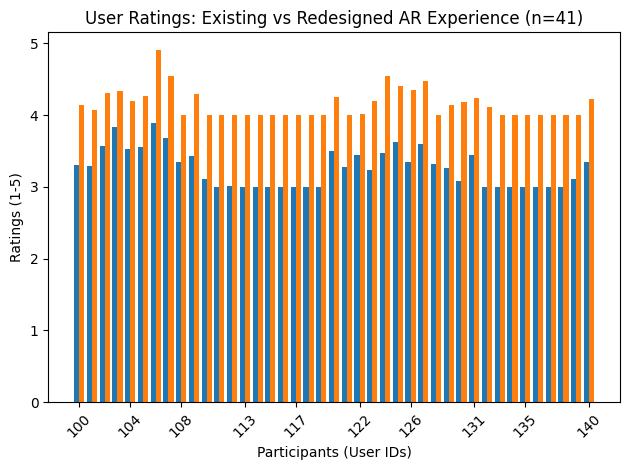
Final Reflection
This project reimagines Macy’s shopping experience by introducing AR as a core interaction layer rather than an add-on feature. By addressing gaps in visibility, navigation, and product visualization, the solution enables users to make more confident and informed purchase decisions.
The redesigned experience improved engagement, usability, and purchase confidence, while also supporting business goals like increased conversions and reduced returns.
Ultimately, this project highlights how AR can bridge the gap between digital and physical retail, creating a more immersive, intuitive, and future-ready shopping experience.
"Design is not just what it looks like. Design is how it works and how it makes you feel seen.